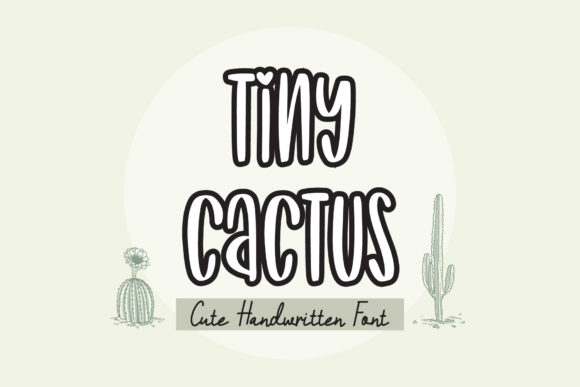
Tiny Cactus: A Friendly Handwritten Font for Small Business Branding
Last Tuesday, I helped a local candle maker update her jar labels — the kind customers hold in their hands, turn over, and read while deciding whether to buy. Her old label used a generic script from a free font site: wobbly spacing, inconsistent letterforms, and zero personality. When she swapped it out for Tiny Cactus, something shifted instantly. The warmth came through. The quirk felt intentional, not accidental. And for the first time, her brand didn’t just say “handmade” — it *felt* handmade, thoughtful, and quietly confident. That’s the power of choosing the right Script Handwritten typeface.
Tiny Cactus for Social Media Posts That Stand Out in the Feed
If you’ve ever scrolled past your own Instagram post thinking, “Why does this look so forgettable?”, the answer might be typography — not content. Tiny Cactus works beautifully for short, high-impact social media posts because its friendly handwritten style adds human charm without sacrificing clarity. Unlike overly decorative scripts that blur at small sizes, Tiny Cactus keeps generous x-height and open counters — meaning letters like “a,” “e,” and “o” stay legible even on mobile thumbnails. I tested it across Reels captions, Story stickers, and carousel headers for a café client, and every version looked cohesive, cheerful, and unmistakably *theirs*. As a Fonts choice for digital-first branding, it bridges authenticity and polish — no design degree required.
Tiny Cactus for Cute Greeting Cards and Handwritten-Style Packaging Tags
There’s a reason handmade soap makers, indie stationery shops, and baby boutique owners reach for Tiny Cactus when designing thank-you cards or product tags: it delivers that gentle, personal touch customers associate with care and attention. Its quirky rhythm — slightly uneven baseline, playful swashes on lowercase “y” and “g,” subtle bounce in the ascenders — mimics real pen-on-paper energy. But unlike raw scanned handwriting, Tiny Cactus is consistent across every letter, every print run, every digital file. That consistency is what makes your brand feel reliable. One floral designer told me she switched to Tiny Cactus for her gift tags and saw more customers photographing them in unboxing posts — proof that great Script Handwritten fonts don’t just communicate; they invite connection.
Tiny Cactus for Posters and Print Materials That Feel Inviting, Not Overdesigned
When a neighborhood bakery asked me to refresh their seasonal menu board and in-store posters, we skipped the ultra-thin serifs and minimalist sans-serifs that felt cold next to warm croissants and cinnamon rolls. Instead, we used Tiny Cactus for headlines and special offers — pairing it with a clean, airy sans serif (like Poppins or Inter) for body text. The contrast worked perfectly: Tiny Cactus added friendliness and approachability; the sans serif kept things readable and grounded. As a Fonts pairing strategy, this combo is low-effort, high-reward. Just avoid using Tiny Cactus for long paragraphs — it’s a display font, built for impact, not endurance. Think titles, slogans, flavor names (“Honey Lavender Scone”), and callouts — not ingredient lists or fine print.
Tiny Cactus for Wedding Invitations and Elegant Branding With a Playful Edge
Yes — Tiny Cactus belongs in elegant contexts too. Don’t let “quirky” fool you: its balanced proportions, refined curves, and graceful terminals give it quiet sophistication. A wedding planner I work with uses Tiny Cactus for couple names and ceremony details on save-the-dates and signage, then pairs it with a delicate serif (like Cormorant Garamond) for addresses and timelines. The result? Romantic, memorable, and refreshingly unstuffy. What makes Tiny Cactus especially valuable here is its commercial licensing — it’s a fully licensed Script Handwritten font, meaning you can use it on physical invites, digital RSVPs, vendor contracts, and printed programs without legal worry. Always check the license before applying any Fonts to client-facing materials — but with Tiny Cactus, you’re covered for both personal and commercial use, including merchandise and templates.
Tiny Cactus for Online Shop Banners and Digital Product Mockups
Your online shop banner is often the first visual impression customers have — and first impressions are made in under two seconds. That’s why I now recommend Tiny Cactus for Etsy banners, Shopify hero sections, and digital product mockups (think: printable planners, sticker sheets, or downloadable art). Its friendly tone helps soften the transactional feel of e-commerce, while its strong visual identity builds instant recognition. Bonus: most Tiny Cactus packages include OpenType features like ligatures and stylistic alternates — small touches that add polish when you need it (like swapping in a swash “T” for a headline). For creators selling digital design assets, having access to those extras means more flexibility and higher perceived value. Just remember — always preview how Tiny Cactus renders on screens versus print. It shines brightest at 24pt and up, and looks crisper in SVG or vector-based mockups than raster-heavy PNGs.
At its core, Tiny Cactus isn’t just another Script Handwritten font — it’s a small but meaningful tool for building trust, warmth, and distinction. Whether you're labeling a candle, designing a greeting card, or updating your Instagram grid, it helps your business feel human first, professional second. And in today’s crowded digital space, that balance is everything.